Olympic Games Host Cities — Topic Guide
Hosting the Olympic Games temporarily turns a city into the world capital of sport. Its name then remains associated with athletic achievements, ceremonies and images broadcast across the globe. Behind the prestige, however, lie very different realities: large metropolitan areas, Alpine resorts, ports, political capitals and entire regions.
Cities That Became Olympic Symbols
Athens holds a special place among Olympic cities. By hosting the first modern Games in 1896 and another edition in 2004, it created a symbolic link between ancient Greece and the modern Olympic movement. Its historic sites have often served as a backdrop, but the modern city also had to build transportation networks and facilities capable of supporting an international competition.
Paris and London illustrate the Games’ repeated return to certain major European capitals. Paris hosted them in 1900, 1924 and 2024, while London was chosen in 1908, 1948 and 2012. Each edition reflected its period. London 1948 took place in a postwar context marked by shortages, while London 2012 helped transform part of the city’s East End. Paris 2024 sought to integrate competitions into famous landmarks and make extensive use of temporary or existing venues.
Los Angeles belongs to the same small group. Host city in 1932 and 1984, it will welcome the Summer Games again in 2028. Its model relies heavily on existing stadiums and a vast metropolitan area. Its ability to reuse infrastructure shows how experienced cities can host several editions without rebuilding everything.
The Games as an Urban Showcase
Host cities often use the Games to reshape their image. Barcelona 1992 remains one of the best-known examples. The city redeveloped its waterfront, improved transportation and opened its urban landscape more fully toward the Mediterranean. The Games were not solely responsible for this transformation, but they accelerated many projects and provided a firm deadline for their completion.
Tokyo presented two very different faces. In 1964, the Japanese capital sought to demonstrate the country’s rapid modernization after the Second World War. New infrastructure, expressways and high-speed rail formed part of that display. Tokyo 2020, held in 2021 because of the pandemic, unfolded under almost opposite conditions, with largely empty stands and a city far less animated than expected.
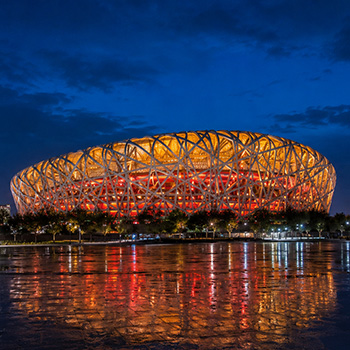
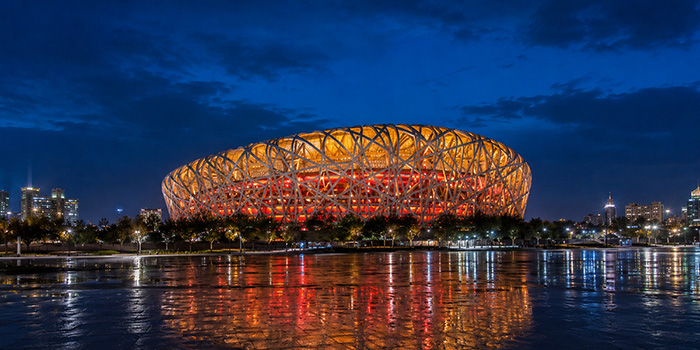
Seoul 1988, Beijing 2008 and Rio de Janeiro 2016 also used the Games as international showcases. Seoul represented a rapidly developing South Korea. Beijing aimed to display China’s power and ambitions, notably through spectacular structures such as the National Stadium. Rio brought the Summer Games to South America for the first time, with venues spread among its beaches, downtown districts and the Barra da Tijuca area.
Olympic Cities in North America
The United States has hosted many editions of both the Summer and Winter Games. In addition to Los Angeles, St. Louis welcomed the Summer Games in 1904, Atlanta hosted them in 1996 and Salt Lake City received the Winter Games in 2002. Lake Placid, a small community in New York State, even hosted the Winter Games in 1932 and 1980, proving that a modest-sized town could establish a lasting Olympic identity.
In Canada, Montreal, Calgary and Vancouver each left a distinct legacy. Montreal 1976 is remembered for Nadia Comăneci’s performances, its inclined stadium tower and a debt that weighed on public finances for many years. Calgary 1988 benefited from wide-open spaces and facilities suited to ice and sliding sports. Vancouver 2010 shared several competitions with Whistler, already demonstrating that modern Games often extend far beyond the boundaries of the officially designated city.
Winter Cities and Mountain Landscapes
Winter Olympic cities do not always resemble the large metropolitan centres that host the Summer Games. Chamonix, St. Moritz, Cortina d’Ampezzo, Innsbruck, Grenoble, Albertville and Lillehammer built their Olympic identities around mountains, snow and winter sports. Some are substantial cities, while others are resorts or small communities surrounded by valleys.
Innsbruck and St. Moritz have each hosted two Winter Games. Their experience, facilities and natural surroundings made a return of the event easier. Cortina d’Ampezzo, host in 1956, again played a major role in Milano Cortina 2026, an edition spread across several areas of northern Italy.
Sapporo, Nagano and PyeongChang helped establish the Winter Games in Asia. Sapporo 1972 was the first winter edition held on the continent. Nagano 1998 linked a Japanese city with several mountain sites, while PyeongChang 2018 introduced an unfamiliar South Korean region to many viewers around the world.
Sochi 2014 presented an unusual situation. The city lies on the Black Sea and has a relatively mild climate, but the snow events were held in the mountains of Krasnaya Polyana. This contrast between coastline and mountain peaks shows that the host city’s name does not necessarily describe the entire Olympic territory.
Important Geographic Firsts
Each new host region changes the map of the Games. Melbourne 1956 was the first city in the Southern Hemisphere to host the Summer Olympics, although the equestrian events had to be held in Stockholm. Tokyo 1964 was the first Summer host in Asia, Mexico City 1968 the first in Latin America and Rio de Janeiro 2016 the first in South America.
Montreal became the first Canadian city to host the Summer Games in 1976. Beijing gained a unique status by hosting the 2008 Summer Games and the 2022 Winter Games. It thus became the first city to organize both versions of the Olympic Games.
The map nevertheless remains incomplete. No African city has yet hosted the Summer or Winter Olympics. The Winter Games have never been held in the Southern Hemisphere, where reversed seasons, long distances and the limited availability of suitable venues make bids more difficult.
When a City Becomes a Region
The expression “Olympic city” is becoming less precise. Football, sailing, cycling, skiing and bobsleigh events often require venues far from the main urban centre. Organizers also try to avoid unnecessary construction by distributing competitions among several communities.
Albertville 1992 carried the name of a small French town, but events took place in several resorts across the Savoie region. Vancouver 2010 depended heavily on Whistler. Milano Cortina 2026 brought together Milan, Cortina d’Ampezzo and several Alpine valleys. The 2030 Winter Games in the French Alps will continue this trend with a regional organization rather than a single dominant city.
Even the Summer Games follow this pattern. Football matches are regularly distributed among several cities, and certain events require specialized venues located far away. The official name remains useful for identifying an edition, but the event now belongs to a much larger territory.
Future Host Cities and Regions
Los Angeles will host the 2028 Summer Games and become, after Paris and London, one of the few cities to have organized them three times. The French Alps will receive the 2030 Winter Games through a model divided among several centres. Brisbane will host the 2032 Summer Games and become the third Australian city to welcome the event after Melbourne and Sydney. Salt Lake City-Utah will host the Winter Games again in 2034, more than thirty years after the 2002 edition.
These choices reveal a growing preference for territories that already possess sports facilities, transportation networks and experience in staging major events. A candidate city must still present an attractive vision, but it must also demonstrate that its project will remain useful after the Olympic Village closes.
A Legacy That Can Be Glorious or Burdensome
Olympic legacies vary considerably. Some cities retain popular parks, housing, transportation lines and sports facilities that remain in use. Barcelona, London and several Winter Games hosts successfully integrated part of their Olympic infrastructure into everyday life or tourism.
Elsewhere, oversized stadiums, high maintenance costs and debt have tarnished the result. Montreal remains the Canadian example most often cited, while some facilities built for Athens 2004 or Rio 2016 experienced periods of underuse.
An Olympic city is therefore not merely a place where competitions were held. It is also a city that must live for decades with the transformations, memories and expenses left by the event. The most successful editions are generally those that adapted the Games to the city rather than permanently reshaping the city for only a few weeks of competition.
Quiz questions preview
-
Which city hosted the 1952 Summer Olympics?
London | Helsinki | Melbourne | Boston -
Which city hosted the 2016 Summer Olympics?
London | Beijing | Paris | Rio de Janeiro -
In what year did the city of St. Louis host the Games of the III Olympiad?
1904 | 1916 | 1912 | 1908 -
In what year did the city of Munich host the Games of the XX Olympiad?
1964 | 1968 | 1976 | 1972 -
Which city was chosen to host the 1944 Games, cancelled due to the outbreak of World War II.
Brussels | Rotterdam | London | Rome

