
Myths, Folklore and Legends — Topic Guide
Myths, legends, and folklore have transmitted human beliefs, fears, and hopes for centuries. They explain the origins of the world, give meaning to the forces of nature, and feature gods, heroes, and extraordinary creatures. Their power comes as much from their imagination as from the values they preserve.
Myth, Legend, Folktale, and Folklore
These terms are closely related, but they do not mean exactly the same thing.
A myth generally recounts events set in a primordial time. It features deities, ancestors, or supernatural forces and seeks to explain the origin of the world, humanity, a people, or a natural phenomenon.
A legend is often based on a person, place, or event that may once have existed. The facts are transformed, however, by collective memory. King Arthur, William Tell, and Robin Hood therefore belong to a world in which history and imagination blend together.
A folktale is more clearly structured as a story intended to entertain or teach a lesson. It may include talking animals, fairies, ogres, or magical objects.
Folklore more broadly includes the stories, songs, beliefs, festivals, superstitions, and popular traditions passed down within a community.
Explaining Origins
Many myths answer fundamental questions: How was the world created? Why must humans die? Where did the seasons, fire, or storms come from?
In Greek mythology, Prometheus steals fire from the gods and gives it to humanity. The myth symbolically explains the acquisition of essential knowledge, but also the price of disobedience.
Norse traditions tell how the world was formed from the body of the giant Ymir. In several Indigenous stories from North America, animals or spiritual beings participate in the creation of the land and the organization of the world.
These stories are not merely early attempts at scientific explanation. Above all, they express the place each people believes it occupies within the universe.
Heroes and Their Trials
The mythical hero often leaves a familiar world, faces dangers, and returns transformed.
Heracles completes twelve labours to atone for a wrongdoing. Odysseus endures many trials before returning to Ithaca. Gilgamesh searches for immortality after the death of his friend Enkidu.
In Arthurian legends, knights seek the Holy Grail, a symbol of purity and spiritual quest. In the story of Beowulf, the hero fights Grendel and later a dragon.
These characters embody courage, loyalty, cleverness, and sacrifice. Their adventures also show that strength alone is not enough: pride, recklessness, and the desire for power can lead to destruction.
Gods, Spirits, and Forces of Nature
Deities often personify powerful forces beyond human control.
Zeus commands lightning, Poseidon rules the sea, and Demeter is associated with crops. In Norse mythology, Thor protects humans from giants, while Odin pursues knowledge at the cost of great sacrifice.
In Japanese tradition, kami may inhabit mountains, rivers, trees, or particular places. In several African cultures, ancestors and spirits remain involved in the life of the community and may intervene in the visible world.
These stories reflect the dependence of human societies on rain, seasons, animals, and natural resources.
Fantastic Creatures and Collective Fears
Folklore is filled with monsters, marvellous animals, and beings that exist between the human and supernatural worlds.
Dragons appear in many cultures. In Europe, they are often dangerous and guard treasure. In China, they are more commonly associated with power, water, and prosperity.
Sirens lure sailors, werewolves represent the savage transformation of human beings, and vampires embody the fear of death refusing to disappear.
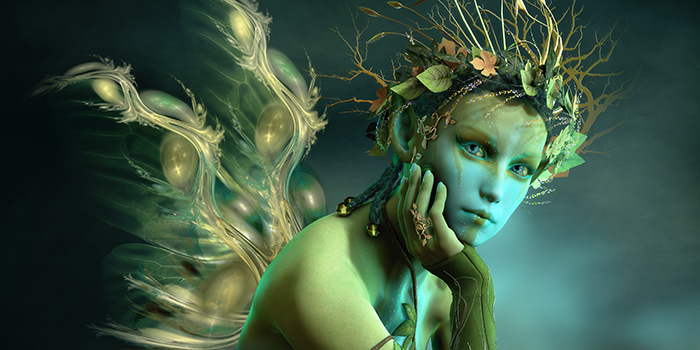
Fairies, trolls, djinn, yōkai, and forest spirits vary from one region to another. They sometimes explain a strange noise, disappearance, or natural danger. They may also reinforce rules of behaviour: do not wander alone, keep your promises, and beware of strangers.
Passing On Values
Traditional stories often teach what a society considers fair, admirable, or dangerous.
Generous, courageous, and loyal characters are rewarded, while liars, misers, and the proud are punished. However, tales may promote different and sometimes contradictory values depending on the period.
Some stories encourage obedience, while others celebrate cleverness in the face of authority. The fox, hare, or raven frequently plays the role of a trickster able to outsmart a more powerful opponent.
These stories therefore educate, but they can also challenge the established order.
A Tradition in Constant Evolution
Myths and legends never remain perfectly unchanged. They evolve according to the storyteller, language, and audience.
Printing fixed certain versions, while cinema, comic books, television, and video games gave ancient stories new life. Thor, Medusa, Dracula, and King Arthur now appear in works that may differ greatly from their original sources.
These adaptations can simplify traditions, but they also demonstrate their ability to survive across time. A myth remains alive when it continues to be told, transformed, and understood by new generations.
Quiz questions preview
-
What name is often given to a female ghost or a female supernatural entity?
Nymph | Gorgon | Grim Reaper | White Lady -
These beings from Nordic mythology are physically distinguished from humans by their pointed ears.
Vulcain | Hobbit | Troll | Elfe -
What name is given to the undead who feed on the blood of the living to draw their life force?
Ogre | Vampire | Gremlin | Pixie -
Demon with the head of a woman and the body of a bird that was known to suck the blood of newborns and young children.
Succubus | Chimera | Gargoyle | Stryge -
According to the Bible, this chest contained the Tables of the Law (the Ten Commandments) given to Moses at Mount Sinai.
Solomon's Sarcophagus | Ark of the Covenant | Pandora's Box | Holy of Holies

