
Scientific Fields — Topic Guide
Scientific fields include the fields of study that seek to understand the world through observation, measurement, experimentation, and the formulation of theories. They examine numbers, matter, living organisms, Earth, the Universe, human societies, and the technical applications of knowledge.
Science and Its Methods
Science is not simply an accumulation of knowledge. It is based on methods that make it possible to test ideas, compare results, and correct errors.
A scientific process often includes several steps:
-
An observation raises a question.
-
A hypothesis proposes a possible explanation.
-
An experiment or study is used to collect data.
-
The results are analyzed and compared with predictions.
-
The hypothesis is provisionally accepted, modified, or rejected.
-
The research is published so that other researchers can examine it.
Not all fields use exactly the same method. A chemist may conduct controlled experiments in a laboratory, while an astronomer observes phenomena that cannot be reproduced. A geologist studies evidence left over millions of years, whereas a sociologist analyzes current human behaviour.
Researchers use models to represent phenomena that are too complex, too large, or too small to be observed directly. A model may take the form of an equation, a map, a computer simulation, or a physical representation.
A scientific theory is a broad explanation supported by numerous observations and experiments. It is not a mere assumption. However, it remains open to revision if new evidence contradicts its predictions.
Formal Sciences
Formal sciences study abstract systems based on rules, symbols, and logical reasoning. Unlike the natural sciences, they do not depend directly on observations of the physical world.
Mathematics is the most important formal science. It studies numbers, shapes, structures, quantities, and relationships.
Its main branches include:
-
Arithmetic studies numbers and operations.
-
Algebra uses symbols to represent relationships.
-
Geometry analyzes shapes, distances, and dimensions.
-
Trigonometry focuses on angles and triangles.
-
Differential and integral calculus study change and accumulation.
-
Probability measures how likely an event is to occur.
-
Statistics are used to collect, organize, and interpret data.
Logic analyzes the rules of reasoning. It helps determine whether a conclusion correctly follows from a set of premises.
Theoretical computer science studies algorithms, data structures, computability, and the limits of computer systems. It examines which problems a machine can solve and the resources required to do so.
Formal sciences provide essential tools for nearly every other field. Equations are used in physics, statistics in medicine, and algorithms in data analysis.
Physics
Physics studies matter, energy, motion, and the fundamental forces of nature. It seeks to establish laws capable of explaining phenomena ranging from subatomic particles to the evolution of the Universe.
Mechanics analyzes motion and the forces acting on objects. It helps explain falling bodies, the operation of machines, and the movement of planets.
Thermodynamics studies heat, temperature, and energy transfer. It explains the operation of engines, refrigerators, and many natural phenomena.
Electromagnetism focuses on electricity, magnetism, and electromagnetic waves. It is the basis of electric motors, telecommunications, and many electronic devices.
Optics studies light, its propagation, and its interactions with matter. It is used in eyeglasses, microscopes, telescopes, and fibre optics.
Quantum physics describes the behaviour of matter and energy at very small scales. It led to the development of transistors, lasers, and much of modern electronics.
Relativity examines space, time, gravity, and motion at very high speeds. It is essential for understanding stars, black holes, and the structure of the Universe.
Chemistry
Chemistry studies the composition, properties, and transformations of matter. It seeks to understand how atoms join together, separate, and react with one another.
General chemistry introduces the fundamental principles of atoms, molecules, bonds, and reactions.
Organic chemistry mainly studies compounds containing carbon. It is involved in the production of medicines, plastics, fuels, and many materials.
Inorganic chemistry focuses on metals, minerals, salts, and compounds that do not primarily belong to organic chemistry.
Analytical chemistry is used to identify the substances present in a sample and measure their quantities. It is used in medical laboratories, the food industry, and forensic science.
Biochemistry examines chemical reactions that occur in living organisms. It studies proteins, carbohydrates, lipids, and nucleic acids.
Physical chemistry applies the principles of physics to chemical transformations. It studies energy, reaction rates, and molecular behaviour.
Astronomy and Space Sciences
Astronomy studies objects and phenomena located beyond Earth’s atmosphere. It focuses on planets, stars, galaxies, and the evolution of the Universe.
Astrophysics applies the laws of physics to celestial bodies. It is used to analyze the light, temperature, composition, and evolution of stars.
Cosmology studies the origin, structure, and development of the Universe as a whole. It examines its expansion and the distribution of matter.
Planetary science compares planets, moons, asteroids, and comets. It uses astronomical observations, space probes, and geological analyses.
Astronautics concerns the technologies related to spaceflight. It includes the design of rockets, satellites, capsules, and orbital stations.
Space exploration brings together several fields, including physics, geology, chemistry, biology, and engineering.
Earth Sciences
Earth sciences study the structure, history, and functioning of our planet.
Geology analyzes rocks, minerals, and changes in Earth’s crust. It helps reconstruct the planet’s history and locate natural resources.
Geophysics applies the principles of physics to the study of Earth’s interior, magnetic field, earthquakes, and gravity.
Seismology focuses on earthquakes and the propagation of seismic waves. It contributes to a better understanding of tectonic plate movements.
Volcanology studies volcanoes, magma, eruptions, and related hazards.
Mineralogy analyzes the properties and formation of minerals, while petrology focuses on rocks.
Paleontology studies ancient forms of life through fossils. It lies at the intersection of geology and biology.
Physical geography examines landforms, landscapes, soils, and the processes that transform Earth’s surface.
The Atmosphere, Climate, and Oceans
Meteorology studies the atmosphere and short-term weather phenomena. It helps forecast temperatures, precipitation, winds, and storms.
Climatology analyzes atmospheric conditions over long periods. It seeks to understand past, present, and future climates.
Oceanography studies the oceans from several perspectives:
-
Physical oceanography analyzes currents, waves, and tides.
-
Chemical oceanography studies the composition of seawater.
-
Biological oceanography examines marine organisms.
-
Geological oceanography focuses on the ocean floor.
Hydrology studies water found on continents, including rivers, lakes, glaciers, and groundwater.
Glaciology focuses on glaciers, ice sheets, and the effects of ice on landscapes and climate.
Life Sciences
Life sciences study organisms, how they function, their origins, their evolution, and their relationships with the environment.
Biology is the general field devoted to the study of living organisms. It includes many specialized branches.
Zoology studies animals, while botany focuses on plants. Mycology examines fungi, and microbiology studies microscopic organisms.
Cytology studies cells, the fundamental units of life. Histology examines the tissues formed by cells.
Anatomy describes the structure of organisms, while physiology analyzes how their organs and systems function.
Developmental biology studies the formation and growth of organisms, from their first cells to adulthood.
Genetics and Evolution
Genetics studies heredity and the transmission of traits. It analyzes genes, DNA, chromosomes, and variations among individuals.
Genomics focuses on the complete genetic material of an organism. It allows researchers to compare species, study certain diseases, and understand evolution.
Molecular biology examines the mechanisms that control cellular activity at the molecular level. It studies protein production and gene expression.
Evolutionary biology seeks to understand how populations and species change over generations. It analyzes natural selection, mutations, adaptation, and the formation of new species.
Phylogenetics reconstructs evolutionary relationships among living organisms. It uses anatomical characteristics, fossils, and genetic data.
Ecology and the Environment
Ecology studies the relationships between organisms and their environment. It may focus on an individual, a population, a community of species, or an entire ecosystem.
Ecologists study areas such as:
-
The distribution of species.
-
Food chains.
-
Water and chemical cycles.
-
Migration.
-
Predator-prey relationships.
-
The effects of human activities.
Conservation biology seeks to protect species, habitats, and biological diversity.
Environmental sciences study the interactions between natural environments and human societies. They combine biology, chemistry, geology, climatology, economics, and geography.
Medical Sciences
Medical sciences study health, diseases, their prevention, and their treatment.
Clinical medicine concerns the diagnosis and care of patients. It includes many specialties, such as cardiology, neurology, pediatrics, and surgery.
Pathology studies diseases and the changes they cause in tissues and organs.
Pharmacology analyzes medicines, their effects, and their use.
Immunology studies the body’s defence mechanisms against infections and foreign substances.
Epidemiology examines the frequency, distribution, and causes of diseases within populations.
Public health seeks to prevent disease and improve collective health through vaccination, education, hygiene, and the organization of healthcare.
Neuroscience studies the brain, spinal cord, nerves, and the functioning of the nervous system.
Humanities and Social Sciences
The humanities and social sciences study human beings, their behaviour, institutions, cultures, and societies.
Psychology analyzes thoughts, emotions, behaviour, and mental processes.
Sociology studies groups, institutions, and social relationships. It examines areas such as family, education, work, and inequality.
Anthropology compares human societies, their cultures, and their evolution. Biological anthropology also focuses on human origins and physical diversity.
Economics analyzes the production, distribution, and consumption of resources. It studies markets, businesses, public policy, and individual decisions.
Political science examines governments, institutions, ideologies, and power relationships.
Demography studies the size, structure, and evolution of populations.
Linguistics analyzes language, its structures, its acquisition, and its evolution.
Archaeology studies past societies through their material remains.
These fields use quantitative methods, such as statistics, as well as qualitative methods based on interviews, observation, and document analysis.
Applied Sciences
Applied sciences use scientific knowledge to solve practical problems.
Engineering designs machines, structures, systems, and processes. It includes civil, mechanical, electrical, chemical, computer, and aerospace engineering.
Agronomy studies agricultural production, soils, crops, and livestock methods.
Forestry concerns the management, use, and protection of forests.
Veterinary medicine focuses on animal health.
Architecture combines technical, scientific, and artistic knowledge to design buildings and spaces.
Applied computer science develops software, networks, databases, and digital systems.
Materials science studies the properties of metals, ceramics, polymers, and composite materials.
Interdisciplinary Fields
Complex problems often extend beyond the boundaries of a single field. Researchers therefore combine several fields of knowledge.
Biophysics applies the principles of physics to living systems. Biochemistry combines biology and chemistry.
Geochemistry studies the chemical composition of Earth. Astrobiology seeks to understand the conditions required for life in the Universe.
Cognitive science combines psychology, neuroscience, linguistics, computer science, and philosophy to study thought.
Bioinformatics uses computer tools to analyze biological and genetic data.
Nanoscience studies matter at an extremely small scale and draws on physics, chemistry, biology, and engineering.
Robotics combines mechanics, electronics, computer science, and artificial intelligence.
Climate science brings together meteorology, oceanography, geology, physics, and chemistry to study the global climate system.
The Evolution of Scientific Fields
Scientific fields are not fixed. They emerge, divide, and come together as knowledge advances.
Astronomy and medicine already existed in ancient civilizations. Physics and chemistry gradually developed as distinct fields. Genetics, computer science, and neuroscience expanded rapidly in the modern era.
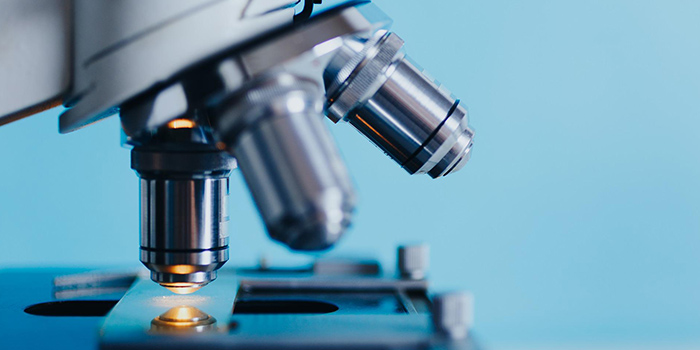
New instruments have profoundly transformed science. The microscope revealed cells and microorganisms. The telescope made it possible to observe distant worlds. Satellites monitor Earth, while particle accelerators explore the structure of matter.
Computers now allow researchers to analyze enormous amounts of data, simulate complex phenomena, and rapidly share results with other scientists.
Specialization encourages very detailed knowledge of precise subjects. However, collaboration among fields remains essential for addressing major challenges involving health, energy, the environment, food, and technology.
Quiz questions preview
-
What scientific discipline studies the oceans and their phenomena?
Maritime navigation | Oceanography | Marine biology | Marine geology -
Branch of biology that studies the development of organisms from fertilization to birth.
Microbiology | Embryology | Comparative anatomy | Genetics -
Which discipline aims to prevent, diagnose, treat and cure diseases and health disorders?
Psychology | Biology | Genetics | Medicine -
A branch of biology that studies the functions and mechanisms of living organisms and their components.
Genetics | Physiology | Physiology | Morphology -
What is the science of sound?
Digital Audio | Sonification | Acoustics | Sonarization

