Pink Floyd — Topic Guide
Pink Floyd transformed rock music by combining sonic experimentation, extended compositions, ambitious concepts and visual spectacles. Formed in London during the 1960s, the group passed through several distinct periods, from Syd Barrett’s psychedelic imagination to the major works dominated by Roger Waters and, later, the albums led by David Gilmour.
The Early Years in London
The group formed in 1965 around Roger Waters, Richard Wright, Nick Mason and Syd Barrett. Waters played bass, Wright keyboards, Mason drums, while Barrett sang, played guitar and wrote most of the early songs.
Barrett created the name Pink Floyd by combining the names of two American blues musicians, Pink Anderson and Floyd Council. The group became known in London clubs associated with the psychedelic counterculture. Its concerts featured long improvisations, light projections and unusual sound effects.
The first single, “Arnold Layne,” was released in 1967. It was followed by “See Emily Play,” which became one of the group’s earliest successes.
Syd Barrett and The Piper at the Gates of Dawn
The first album, The Piper at the Gates of Dawn, was released in 1967. Written almost entirely by Syd Barrett, it combined short songs, whimsical stories and extended instrumental explorations.
Tracks such as “Astronomy Domine” and “Interstellar Overdrive” illustrated two sides of the young Pink Floyd: eccentric pop and improvisation-based space rock. Barrett drew inspiration from fairy tales, childhood, science fiction and the British imagination.
His behaviour, however, became increasingly unpredictable. His mental health deteriorated, and his use of psychedelic drugs is often considered an aggravating factor, although it does not fully explain his difficulties.
The Arrival of David Gilmour
David Gilmour joined Pink Floyd in late 1967. The original idea was for him to support Barrett onstage, but the situation quickly became unmanageable. Barrett officially left the group in 1968.
Gilmour became the main guitarist and one of the lead singers. His melodic playing, recognizable for its sustained notes, vibrato and expressive use of effects, contributed greatly to Pink Floyd’s musical identity.
Barrett’s departure deeply affected the other members. His absence and fragile condition would later reappear indirectly in several works dealing with madness, loss and isolation.
A Period of Exploration
After Barrett’s departure, Pink Floyd had to find a new direction. A Saucerful of Secrets, released in 1968, still contained one Barrett composition, but already revealed a more collaborative group.
The following albums were highly experimental. The soundtrack to the film More explored folk, heavy rock and atmospheric music. Ummagumma combined live recordings with individual compositions by each member.
In 1970, Atom Heart Mother featured an extended suite accompanied by an orchestra and choir. Obscured by Clouds, the soundtrack to the film La Vallée, contained more direct songs. This period allowed the group to develop its methods before producing its most celebrated albums.
Meddle and the Birth of the Classic Sound
Released in 1971, Meddle marked a decisive step. “Echoes,” which occupied the entire second side of the original record, lasted more than twenty minutes. It combined vocals, guitar, organ, electronic effects and lengthy instrumental sections.
“Echoes” showed that the group could build a coherent work from improvisation. The contributions of Gilmour, Waters, Wright and Mason achieved an especially fruitful balance.
The Dark Side of the Moon
In 1973, Pink Floyd released The Dark Side of the Moon. The album explored time, money, fear, work, war, death and mental fragility. The songs flowed almost continuously into one another, creating the impression of a single unified work.
Its best-known tracks include “Time,” “Money,” “Us and Them” and “The Great Gig in the Sky.” The album used heartbeats, clocks, cash registers, spoken voices and synthesizers.
Richard Wright played a major role in its harmonies and keyboard arrangements. Clare Torry improvised the famous vocal performance on “The Great Gig in the Sky,” while engineer Alan Parsons contributed to the precision of the recording.
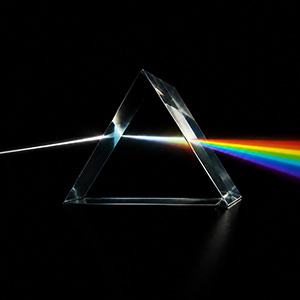
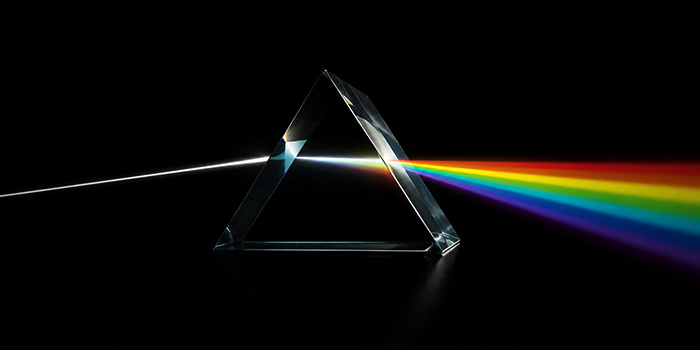
The prism cover, designed by Hipgnosis and George Hardie, became one of the most famous images in rock history. The album achieved lasting worldwide success.
Wish You Were Here
After such enormous success, the group felt intense pressure. Wish You Were Here, released in 1975, dealt with absence, alienation and the machinery of the music industry.
The extended suite “Shine On You Crazy Diamond” paid tribute to Syd Barrett. During the recording sessions, Barrett unexpectedly appeared at the studio, having changed greatly in appearance. The members took some time to recognize him.
“Wish You Were Here” became one of the group’s most popular songs. “Welcome to the Machine” and “Have a Cigar” criticized the record industry.
Animals and Social Criticism
In 1977, Animals presented a dark vision of British society. Loosely inspired by George Orwell’s Animal Farm, the album divided people into dogs, pigs and sheep.
Roger Waters took an increasingly dominant role in the writing and overall concepts. The lyrics became more political, bitter and direct. The cover showed an inflatable pig floating above Battersea Power Station in London.
The Wall
The Wall, released in 1979, was largely conceived by Roger Waters. The album told the story of Pink, a rock star who builds an imaginary wall between himself and the outside world. The character drew inspiration from Waters, Syd Barrett and certain experiences lived by the group.
The story explored the death of a father, authoritarian education, fame, loneliness and psychological collapse. “Another Brick in the Wall, Part 2” became Pink Floyd’s only single to reach number one in several countries. “Comfortably Numb,” “Hey You” and “Run Like Hell” were also among its major songs.
The Wall concerts were extremely elaborate. A wall was built across the stage and then destroyed at the end. Projections, giant puppets and animated characters completed the production.
Internal tensions worsened during the recording. Richard Wright was forced out of the group, although he later took part in the concerts as a salaried musician.
The Final Cut and Roger Waters’s Departure
Released in 1983, The Final Cut was dominated by Roger Waters. The album was shaped by war, the memory of his father, who died during the Second World War, and his anger toward political leaders.
David Gilmour contributed little to the writing, and Richard Wright was absent. The work resembled a Waters solo album performed with Pink Floyd.
Waters left the group in 1985, believing that it had no reason to continue. Gilmour and Mason, however, wanted to retain the name. Following a legal dispute, they continued performing and recording as Pink Floyd.
The David Gilmour-Led Period
A Momentary Lapse of Reason was released in 1987. Gilmour led the project, working with Mason and several guest musicians. Richard Wright gradually returned to the group’s circle.
The album included “Learning to Fly” and “On the Turning Away.” The tour that followed confirmed that Pink Floyd could continue without Waters.
In 1994, The Division Bell gave Wright a greater role and focused mainly on communication. “High Hopes” became one of its most memorable tracks. The tour was documented in the live album and concert film Pulse.
Reunion and Final Years
In 2005, Waters, Gilmour, Wright and Mason reunited for the Live 8 concert in London. It was their first performance together in more than twenty years and the final appearance of the classic four-member lineup.
Syd Barrett died in 2006, and Richard Wright died in 2008. In 2014, Gilmour and Mason released The Endless River, built largely from recordings made with Wright during the sessions for The Division Bell. The mostly instrumental album served as a tribute to him.
A Distinctive Sound and Visual Identity
Pink Floyd stood out for its extended compositions, seamless transitions, sound effects, synthesizers and Gilmour’s guitar solos. Wright’s keyboards brought depth and atmosphere, while Mason’s drumming often favoured restraint.
Waters’s lyrics explored alienation, war, power, money, madness and the difficulty of communication. The group also placed exceptional importance on album covers, films, lighting and live productions.
Its influence extends far beyond progressive rock. Pink Floyd demonstrated that a popular album could be accessible, experimental, narrative and visually coherent at the same time.
Quiz questions preview
-
It was one of the names of the band before it became "Pink Floyd" in 1965.
Tea Set | Endless River | Gates of Dawn | Roller Coaster -
On which album is "Welcome to the Machine"?
Meddle | The Dark Side of the Moon | Wish You Were Here | Atom Heart Mother -
On which album is "Hey You"?
Animals | More | Wish You Were Here | The Wall -
On which album did the band have only two official members?
All these answers | A Momentary Lapse of Reason | The Division Bell | The Endless River -
Which of these albums reached #1 in the UK and US?
The Wall | Wish You Were Here | The Final Cut | Animals

