
Literary Characters — Topic Guide
Literary characters give human form to the ideas, conflicts, and emotions of a work. They may be courageous, contradictory, comic, or disturbing. Through their actions, thoughts, and relationships, they allow readers to explore an era, a society, or a particular way of understanding the human condition.
How a Character Comes to Life
A literary character is built gradually. The author may describe their appearance, background, and social environment, but reveals them mainly through what they do and say.
Dialogue shows how they think and how they relate to others. Gestures, silences, and decisions also help reveal their personality.
The narrator may explain the character’s thoughts directly, leave them to be inferred, or present them through someone else’s perspective. This distance influences the way readers judge the character.
Heroes and Their Quests
The hero often occupies the centre of the story. They pursue a goal, face obstacles, and must make choices.
Odysseus, in The Odyssey, seeks to return to Ithaca after the Trojan War. His intelligence, patience, and cunning matter as much as his strength.
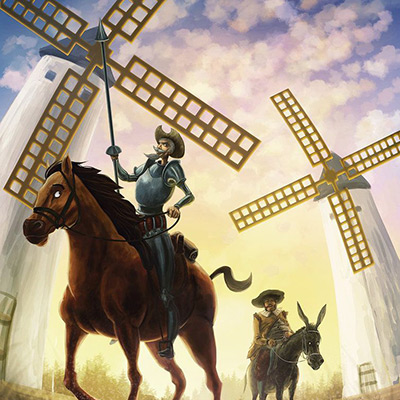
Don Quixote pursues a chivalric ideal in a world that no longer matches his dreams. His adventures are comic, but they also express the conflict between imagination and reality.
Jean Valjean, in Les Misérables, tries to rebuild his life after years in prison. His journey explores compassion, justice, guilt, and the possibility of change.
Antiheroes
An antihero occupies a central role without possessing all the qualities of a traditional hero. They may be passive, selfish, weak, or morally ambiguous.
Meursault, in The Stranger, appears detached from emotions and social conventions. His behaviour is disturbing because it does not correspond to what those around him expect.
Emma Bovary tries to escape a life she considers dull. Her dreams, frustrations, and mistakes make her both flawed and deeply human.
Tragic Figures
The tragic character struggles against a situation that seems inevitably to lead to ruin.
Oedipus seeks the truth about the disaster affecting Thebes, without knowing that the investigation will reveal his own history. Hamlet hesitates between his duty to avenge his father, his doubts, and his fear of committing an injustice.
Anna Karenina confronts social rules, passion, and the consequences of her choices. These characters are often caught between their desires and forces greater than themselves.
Tragedy shows how a quality, a weakness, or a decision can become destructive.
Detectives and Adventurers
Some characters are defined by their ability to act, observe, or solve mysteries.
Sherlock Holmes uses logic, attention to detail, and deduction to explain what appears mysterious. His exceptional intelligence is balanced by a distant personality.
D’Artagnan, Edmond Dantès, and Robinson Crusoe belong to worlds in which danger, travel, and survival occupy a central place.
Comic Characters
Comic characters provoke laughter through their language, flaws, ambitions, or inability to understand a situation.
Harpagon, in The Miser, is ruled by his excessive love of money. Tartuffe embodies religious hypocrisy, while Monsieur Jourdain awkwardly tries to imitate the upper classes.
Humour therefore becomes a way of criticizing vanity, greed, snobbery, and the absurdity of human behaviour.
Psychological Depth
Literature allows readers to enter directly into a character’s consciousness. They can follow memories, doubts, and the most private thoughts.
Interior monologue, diary entries, and first-person narration strengthen this sense of closeness. They do not, however, guarantee that the character is telling the whole truth.
A narrator may be mistaken, forget facts, or try to justify their actions. This uncertainty requires readers to interpret the story.
Character Development
A character may change over the course of the story. Trials and experiences alter their values, relationships, or understanding of the world.
Elizabeth Bennet, in Pride and Prejudice, learns to question her first impressions. Ebenezer Scrooge, in A Christmas Carol, gradually abandons his selfishness after being confronted with his past and future.
Some characters, however, refuse to change. Their lack of growth may lead to failure or reveal the strength of their obsessions.
Archetypes and Universal Figures
Many characters follow ancient models: the hero, mentor, traitor, lover, rival, or trickster.
An archetype makes a character easy to recognize, but becomes truly interesting only when an author gives it a distinctive voice, history, and set of contradictions.
Don Juan, Faust, Frankenstein, and Romeo and Juliet have transcended their original works. Their names immediately evoke a behaviour, conflict, or destiny.
The Reader’s Role
Literature does not always show a character’s face precisely. Readers therefore complete the descriptions and build their own mental image.
This freedom explains why a film or television adaptation may be surprising. The chosen portrayal does not necessarily match the image imagined while reading.
A character remains alive when they continue to inspire interpretations, debates, and new adaptations long after the work was first published.
Quiz questions preview
-
Character from Victor Hugo's novel "Les Misérables" (1862).
Esmeralda | Quasimodo | D'Artagnan | Jean Valjean -
Character from Fyodor Dostoyevsky's novel "Crime and Punishment" (1866).
Rodion Raskolnikov | Pierre Bezoukhov | Anton Gagarin | Grigori Raspoutin -
Character from Victor Hugo's novel "Notre-Dame de Paris" (1831).
Erik, the Phantom of the Opera | Lennie Small | Quasimodo | Frankenstein -
This character was created in 1877 by Leo Tolstoy.
Hester Prynne | Isabel Archer | Emma Bovary | Anna Karenina -
Character from Pierre Choderlos de Laclos' epistolary novel "Dangerous Liaisons" (1779-1782).
The Vicomte de Morcerf | The Vicomte de Bragelonne | The Vicomte de Chagny | The Vicomte de Valmont

