Great Names in Politics Since 1900 — Topic Guide
Since the beginning of the 20th century, leaders, revolutionaries, diplomats and activists have profoundly transformed the world order. Some defended democracy, independence or civil rights, while others imposed authoritarian regimes and caused deadly conflicts. Their decisions shaped the borders, institutions, ideologies and balances of power that continue to structure contemporary politics.
Leaders of the Early 20th Century
-
Theodore Roosevelt, president of the United States from 1901 to 1909, strengthened the federal government and his country’s international influence.
-
He pursued an active foreign policy and helped mediate the end of the Russo-Japanese War.
-
Woodrow Wilson led the United States during the First World War.
-
He proposed the creation of the League of Nations to prevent future conflicts.
-
French prime minister Georges Clemenceau played a major role in the Allied victory and the negotiations leading to the Treaty of Versailles.
-
David Lloyd George led the British government during much of the war.
-
German emperor Wilhelm II embodied the military power and ambitions of Imperial Germany.
Lenin and the Russian Revolution
-
Vladimir Lenin was the principal leader of the Bolshevik Revolution of 1917.
-
He supported a radical transformation of society based on Marxist ideas.
-
The Bolsheviks overthrew Russia’s provisional government and established a communist regime.
-
Lenin led the new government during the civil war.
-
He helped create the Soviet Union in 1922.
-
His revolution inspired many communist movements around the world.
Joseph Stalin
-
Joseph Stalin established himself as leader of the Soviet Union after Lenin’s death.
-
He rapidly transformed the country through industrialization and the forced collectivization of agriculture.
-
His policies caused famines, deportations and the deaths of millions of people.
-
The Great Purge eliminated many real or alleged opponents.
-
During the Second World War, Stalin led the Soviet Union against Nazi Germany.
-
After the victory, he extended Soviet influence over Eastern Europe.
-
His regime became one of the principal examples of totalitarianism in the 20th century.
Benito Mussolini
-
Benito Mussolini founded the Italian Fascist movement.
-
He came to power in 1922 following the March on Rome.
-
His regime suppressed political freedoms and glorified nationalism, authority and violence.
-
Mussolini sought to restore Italy’s imperial greatness.
-
He invaded Ethiopia and moved closer to Adolf Hitler.
-
His alliance with Germany brought Italy into the Second World War.
-
He was overthrown and executed in 1945.
Adolf Hitler
-
Adolf Hitler led the German National Socialist Party.
-
He became chancellor in 1933 and rapidly transformed Germany into a dictatorship.
-
His ideology was based on racism, antisemitism, extreme nationalism and territorial conquest.
-
His regime persecuted political opponents, Jews, Roma, people with disabilities and several other groups.
-
The invasion of Poland in 1939 triggered the Second World War in Europe.
-
Nazi policies led to the Holocaust, during which six million Jews were murdered.
-
Hitler remains one of the most destructive figures in modern political history.
Winston Churchill
-
Winston Churchill became prime minister of the United Kingdom in 1940.
-
He embodied British resistance to Nazi Germany.
-
His speeches helped sustain public morale during the bombings.
-
He formed an alliance with the United States and the Soviet Union despite his opposition to communism.
-
After the war, he denounced Soviet expansion in Europe.
-
He popularized the expression “Iron Curtain” to describe the division of the continent.
Franklin D. Roosevelt
-
Franklin D. Roosevelt was elected president of the United States four times.
-
He launched the New Deal to combat the consequences of the Great Depression.
-
His policies strengthened the federal government’s role in the economy and social protection.
-
During the Second World War, Roosevelt initially supported the Allies before the United States officially entered the conflict.
-
He worked with Churchill and Stalin to organize the postwar world.
-
He participated in preparations for the creation of the United Nations.
Charles de Gaulle
-
Charles de Gaulle issued the Appeal of June 18, 1940, following the French defeat.
-
He became the leader of Free France and refused to accept the Vichy regime.
-
After the war, he briefly led the provisional government.
-
He returned to power in 1958 during the Algerian War.
-
De Gaulle founded the Fifth Republic and strengthened presidential powers.
-
He defended France’s diplomatic and military independence.
-
He ultimately accepted Algerian independence in 1962.
Mao Zedong
-
Mao Zedong led the Chinese Communist Party during the civil war against the Nationalists.
-
He proclaimed the People’s Republic of China in 1949.
-
His regime redistributed land and profoundly transformed Chinese society.
-
The Great Leap Forward sought to accelerate industrialization but caused a catastrophic famine.
-
The Cultural Revolution brought persecution, violence and the destruction of part of China’s cultural heritage.
-
Mao remains a central and controversial figure in Chinese history.
Gandhi and Indian Independence
-
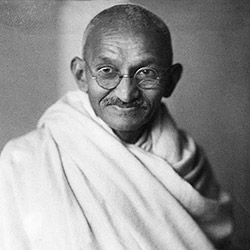
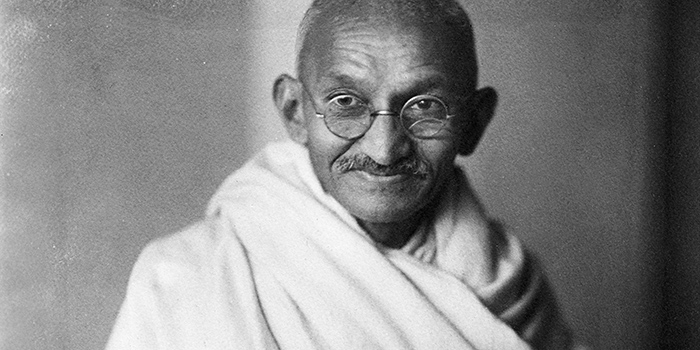
Mohandas Gandhi was one of the principal leaders of the struggle against British rule in India.
-
He promoted nonviolent resistance and civil disobedience.
-
The Salt March of 1930 symbolized his opposition to colonial laws.
-
Gandhi hoped to preserve unity between Hindus and Muslims.
-
India became independent in 1947 but was divided into India and Pakistan.
-
Gandhi was assassinated in 1948.
-
His methods influenced many liberation and civil rights movements.
Jawaharlal Nehru and Muhammad Ali Jinnah
-
Jawaharlal Nehru became the first prime minister of independent India.
-
He supported parliamentary democracy, economic planning and a non-aligned foreign policy.
-
Muhammad Ali Jinnah was the principal founder of Pakistan.
-
He defended the creation of a state intended for the Muslims of the Indian subcontinent.
-
Partition caused mass migrations and terrible communal violence.
-
Nehru and Jinnah embodied two political visions that emerged from the end of the British Empire in South Asia.
The Beginning of the Cold War
-
Harry Truman succeeded Roosevelt as president of the United States.
-
He adopted a policy intended to contain the expansion of communism.
-
The Truman Doctrine and the Marshall Plan strengthened American influence in Western Europe.
-
Nikita Khrushchev led the Soviet Union after Stalin’s death.
-
He denounced some of his predecessor’s crimes and began a period of de-Stalinization.
-
John F. Kennedy led the United States during the Cuban Missile Crisis.
-
The 1962 confrontation brought the world close to nuclear war.
Fidel Castro and Che Guevara
-
Fidel Castro took power in Cuba following the revolution of 1959.
-
He nationalized several companies and established a communist regime allied with the Soviet Union.
-
His government developed education and health care but severely restricted political freedoms.
-
Ernesto “Che” Guevara participated in the Cuban Revolution.
-
He later attempted to provoke revolutions in other countries.
-
Guevara was executed in Bolivia in 1967.
-
His image became a worldwide symbol of revolution and protest.
African Decolonization
-
Kwame Nkrumah led the Gold Coast to independence as Ghana in 1957.
-
He promoted Pan-Africanism and the political unity of the continent.
-
Patrice Lumumba became the first head of government of the independent Congo in 1960.
-
He was overthrown and assassinated during a political crisis involving foreign interference.
-
Jomo Kenyatta was a major figure in Kenya’s independence.
-
Léopold Sédar Senghor became the first president of Senegal.
-
Julius Nyerere led Tanzania and attempted to establish a form of African socialism.
Gamal Abdel Nasser
-
Gamal Abdel Nasser took power in Egypt following the revolution of 1952.
-
He promoted Arab nationalism and the end of colonial influence.
-
In 1956, he nationalized the Suez Canal.
-
France, the United Kingdom and Israel launched a military intervention but were forced to withdraw.
-
The crisis strengthened Nasser’s prestige throughout the Arab world.
-
He also encouraged the Non-Aligned Movement.
David Ben-Gurion and Middle Eastern Leaders
-
David Ben-Gurion proclaimed the independence of Israel in 1948 and became its first head of government.
-
He played a central role in building the institutions of the new state.
-
Golda Meir was one of the first women to lead a modern government.
-
Egyptian president Anwar Sadat signed a peace treaty with Israel in 1979.
-
Menachem Begin was the Israeli prime minister associated with the agreement.
-
Yasser Arafat led the Palestinian national movement for several decades.
-
Yitzhak Rabin participated in the Oslo Accords before being assassinated in 1995.
Martin Luther King and Civil Rights
-
Martin Luther King Jr. was one of the leading figures of the American civil rights movement.
-
He fought racial segregation through nonviolent methods.
-
His “I Have a Dream” speech became a symbol of the struggle for equality.
-
He helped mobilize support for the adoption of laws against discrimination.
-
Malcolm X promoted a more radical approach to African American emancipation.
-
Rosa Parks became an emblematic figure after refusing to give up her seat on a segregated bus.
-
These activists profoundly transformed American society and politics.
Nelson Mandela
-
Nelson Mandela fought against apartheid in South Africa.
-
He was imprisoned for twenty-seven years.
-
His release in 1990 opened the way for political negotiations.
-
Together with President Frederik de Klerk, he helped end institutionalized racial segregation.
-
Mandela became South Africa’s first Black president in 1994.
-
He promoted national reconciliation rather than revenge.
-
His life made him a worldwide symbol of freedom and dignity.
Margaret Thatcher and Ronald Reagan
-
Margaret Thatcher led the United Kingdom from 1979 to 1990.
-
She privatized several state-owned companies, reduced the power of trade unions and promoted free-market policies.
-
Her policies profoundly transformed the British economy.
-
Ronald Reagan became president of the United States in 1981.
-
He cut taxes, increased military spending and adopted a firm stance toward the Soviet Union.
-
Thatcher and Reagan became the leading figures of the conservative revival of the 1980s.
Mikhail Gorbachev
-
Mikhail Gorbachev became leader of the Soviet Union in 1985.
-
He launched perestroika, intended to restructure the economy.
-
Glasnost encouraged greater freedom of expression.
-
Gorbachev reduced tensions with the United States and negotiated disarmament agreements.
-
He refused to use massive force to preserve the communist regimes of Eastern Europe.
-
His reforms unintentionally contributed to the collapse of the Soviet Union in 1991.
Deng Xiaoping
-
Deng Xiaoping became China’s principal leader after Mao’s death.
-
He introduced economic reforms while maintaining the political control of the Communist Party.
-
China gradually opened itself to international trade and foreign investment.
-
These policies produced considerable economic growth.
-
The regime nevertheless suppressed the Tiananmen Square movement in 1989.
-
Deng laid the foundations for China’s economic and geopolitical rise.
Women in Power
-
Indira Gandhi led India during several periods between 1966 and 1984.
-
She strengthened central authority but also imposed a state of emergency that restricted civil liberties.
-
Golda Meir led Israel during the Yom Kippur War.
-
Benazir Bhutto became the first woman to head the government of a Muslim-majority country.
-
Corazon Aquino helped restore democracy in the Philippines after the fall of Ferdinand Marcos.
-
Angela Merkel led Germany for sixteen years and played a central role in the European Union.
-
Ellen Johnson Sirleaf became the first woman elected president of an African country.
Leaders of the Post-Cold War Era
-
George H. W. Bush led the United States during the end of the Cold War and the Gulf War.
-
Bill Clinton oversaw economic globalization and the expansion of American influence during the 1990s.
-
Boris Yeltsin led Russia through the difficult transition following the collapse of the Soviet Union.
-
Vladimir Putin became the dominant figure in Russian politics beginning in 2000.
-
He strengthened central authority and sought to restore Russia’s international influence.
-
His domestic and foreign policies caused major tensions with Western countries.
Leaders of the Early 21st Century
-
George W. Bush led the United States during the terrorist attacks of September 11, 2001.
-
He launched the wars in Afghanistan and Iraq as part of the fight against terrorism.
-
Barack Obama became the first African American president of the United States in 2009.
-
He introduced a major health insurance reform and sought to improve the country’s international image.
-
Donald Trump transformed American politics through his nationalism, confrontational style and intensive use of social media.
-
Joe Biden represented a more traditional approach to American politics after the 2020 election.
China, India and Emerging Powers
-
Xi Jinping became China’s principal political figure beginning in 2012.
-
He strengthened Communist Party control and developed a more ambitious foreign policy.
-
Narendra Modi became head of the Indian government in 2014.
-
He combined economic modernization, Hindu nationalism and a stronger international role for India.
-
Luiz Inácio Lula da Silva became a major figure of the Latin American left and Brazilian politics.
-
Recep Tayyip Erdoğan transformed Turkey by gradually concentrating power around the presidency.
-
These leaders illustrate the rise of emerging powers and the diversification of global centres of influence.
Politics and Contemporary Challenges
-
Volodymyr Zelenskyy became an international figure following Russia’s invasion of Ukraine in 2022.
-
His leadership came to symbolize Ukrainian resistance and the defence of national sovereignty.
-
Activists such as Greta Thunberg exercised political influence without holding government office.
-
Malala Yousafzai became a global advocate for girls’ education.
-
Climate change, migration, inequality, conflict and digital technologies are transforming political action.
-
The great names of politics are no longer only heads of state, but also activists, diplomats and figures from civil society.
Recognizing a Major Political Figure
-
The period, country and ideology provide essential clues.
-
Churchill, Roosevelt and Stalin are closely associated with the Second World War.
-
Kennedy, Khrushchev and Castro recall the major crises of the Cold War.
-
Gandhi, Nkrumah, Nasser and Mandela are associated with decolonization and struggles for emancipation.
-
Reagan, Thatcher and Gorbachev embody the transformations of the 1980s.
-
Mao, Deng and Xi represent different stages of Chinese political history.
-
Speeches, reforms, conflicts and movements associated with a person help explain their role in history.
Quiz questions preview
-
After founding the Palestine Liberation Movement, Fatah, he became leader of the PLO from 1969 until his death in 2004.
Mahmoud Abbas | Yitzhak Rabin | Ahmed Choukairy | Yasser Arafat -
Crowned Queen in 1952, she was the longest reigning British sovereign.
Margrethe II | Victoria | Elizabeth II | Juliana -
The only four-time U.S. president elected, he declared war on Axis forces after the attack on Pearl Harbor in 1941.
Woodrow Wilson | Herbert Hoover | Franklin D. Roosevelt | Theodore Roosevelt -
Leader of the October 1917 uprising in Russia that overthrew the tsarist regime and instituted a Marxist doctrine.
Alexander Kerensky | Vladimir Ilyich Lenin | Mikhail Rodzianko | Lev Kamenev -
One of Italy's richest men, he was elected three times as head of the government of the Republic between 1994 and 2011.
Romano Prodi | Matteo Salvini | Silvio Berlusconi | Bettino Craxi

